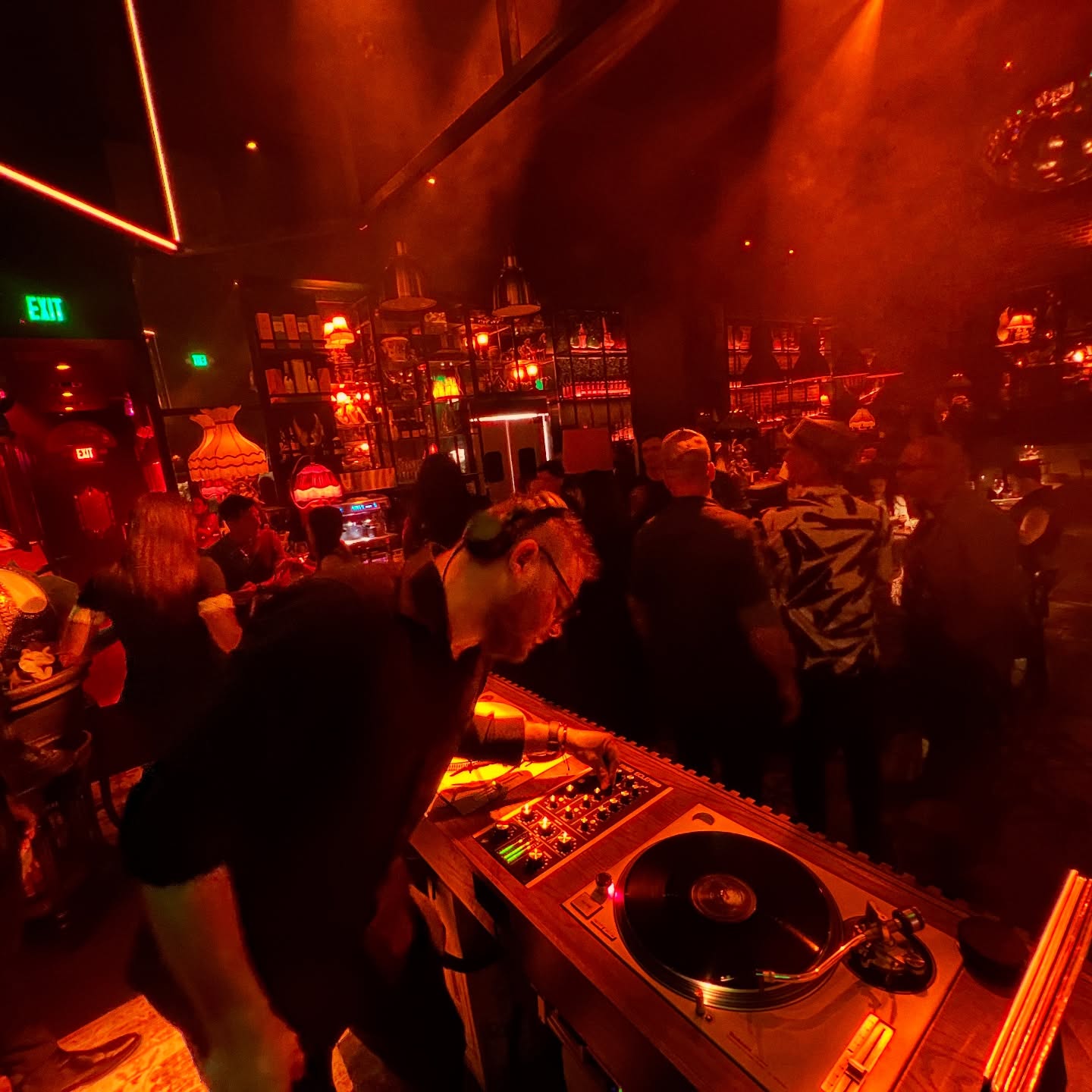
Vallenato
Accordion, caja and guacharaca. UNESCO listed it in 2015 as heritage of the Greater Magdalena region. It is what makes a Colombian party sound like no other Latin party — and it's the first thing you notice when the DJ isn't Colombian.
Colombian party
I'm caleño, and that means two things. That salsa isn't a block in my set — it's where I'm from: Niche, Guayacán, Los Nemus, the kind you dance with your feet. And that I grew up knowing a costeño room, a paisa room and a caleño room don't ask for the same thing — which is exactly what a DJ who only plays "Latin music" doesn't know. Weddings, quinceañeras, graduations and Colombian parties in Orlando, Kissimmee, Tampa and across Central Florida.
What plays
A costeño room, a paisa room and a caleño room do not ask for the same thing. The difference between a Colombian DJ and a DJ who plays Colombian music sits exactly there.
Accordion, caja and guacharaca. UNESCO listed it in 2015 as heritage of the Greater Magdalena region. It is what makes a Colombian party sound like no other Latin party — and it's the first thing you notice when the DJ isn't Colombian.
Mine. Niche, Guayacán, Los Nemus. Alexis Lozano co-founded Niche with Jairo Varela and years later left to found Guayacán — that's the lineage I grew up on. Fast, footwork-driven, with its own repertoire. It's not New York salsa and it's not Cuban son, and when there are caleños in the room you know within thirty seconds.
Darío Gómez, El Charrito Negro, Yeison Jiménez. Antioquia, not the Caribbean. This is the two-in-the-morning block, and it has no equivalent at a Puerto Rican or Cuban party: the entire room singing the same thing.
Cartagena and the Córdoba savanna. Champeta came out of the picós — the mobile sound systems that threw neighbourhood street parties. Porro is brass: clarinets, trombones, bass drum. You play them by reading the costeños in the room.
Cumbia is Colombian in origin but today it belongs to everyone: gaita cumbia sounds nothing like Mexican sonidera or Argentine villera. The electronic guaracha is ours, from the 2010s, around 130 BPM — and it has nothing to do with Cuban guaracha.
It was born in Puerto Rico and that isn't up for debate. What belongs to Medellín is the factory: Balvin, Karol G, Feid, Ryan Castro and the producers behind half of what's playing. I play it knowing where each piece comes from.
Cali is the gateway to the Pacific. Salsa choke came out of there in the 2010s and went global when the national team danced it celebrating goals in 2014. Marimba, chirimía and currulao are from Buenaventura and Chocó, not from all of Colombia — you play them when the room knows what they are. That's where you can tell where a DJ is from.
The night
Soft vallenato and porro while people arrive and the first drink goes around. Nobody dances yet, and that's right: a Colombian party warms up through the voice, not the kick drum.
Once the room is full, Cali. “Oiga, Mire, Vea” opens the floor by itself. This is the block I don't have to think about — it's the music I learned to dance to. If there are caleños I spot them in thirty seconds by their feet, and that's when I decide how far to stretch it.
Merengue, champeta, guaracha, reggaetón. This is where the night is won or lost, and where it matters whether the room is costeño, paisa, caleño or half Puerto Rican.
Two in the morning. The lights come down, the voices come up and the whole room sings. It is the most Colombian moment of the night, and the one no outside DJ knows how to place.
Two things almost nobody will tell you. First: I do the hora loca and I do it well, but it is not a Colombian tradition — it belongs to all of Latin America. Second: being caleño gives me the salsa for free, but vallenato, champeta and despecho I work at, and they get played according to who's in the room, not according to what I like. A DJ who only plays his own thing isn't reading the party.
Where
In 2024, 434,000 overnight visitors from Colombia came to Miami-Dade — ahead of Brazil, Canada, the UK and Mexico. That's on top of roughly 138,000 Colombian residents in the county. It isn't a niche: it's the destination's number one international market, and a good share of those weddings and celebrations fly the family in from Colombia.
See MiamiMore than 36,000 Colombian-born residents live in the Tampa Bay area, and Barranquilla has been Tampa's sister city since the 1960s — the Carnaval de Barranquilla has been celebrated here for over twenty-five years. Since March 2025 there's a nonstop Tampa–Bogotá flight, this airport's first ever to South America. Here a Colombian party isn't a niche: it's a community with its own calendar.
See Tampa BayOrlando and Tampa are among the five U.S. metro areas with the highest concentration of Colombian immigrants, alongside New York, Miami and Houston. Osceola County is 3.2% Colombian and Orange County 2.9%, against 0.44% nationally. Colombia's consulate for all of Central and West Florida is here, and there are three daily flights to Bogotá and one to Medellín: when family comes from Colombia for a wedding, they come on a single flight.
See OrlandoQuestions
From Cali. That's why the salsa in my set is Niche, Guayacán and Los Nemus rather than New York, and why I know Pacific-coast music, which almost no DJ plays. Vallenato and despecho aren't mine by birth — those I earned in the booth.
No, I'm a DJ. If you want a live parranda vallenata I'll find one and coordinate the handoff between the group and the booth — which is exactly where the party usually drops.
That's almost always the case, especially in Kissimmee, where the Latino crowd is predominantly Puerto Rican. That's why I read the room by region rather than by country: a costeño room is not a paisa room, and neither is a half-Boricua one.
Yes, and I do it well. But I won't sell it to you as a Colombian tradition, because it isn't — it belongs to all of Latin America. I'd rather tell you the truth and have you trust the rest.
Yes, and in English when it's needed. At a Colombian wedding in Florida there's almost always family who landed yesterday from Colombia and friends born here who answer in English. Both tables have to understand the same toast.
No, and it would be a mistake. Being caleño gives me the salsa for free, but the party is built around who is in the room. If the family is costeño, I bring vallenato and champeta; if they're paisa, despecho at two. What I personally prefer matters to nobody on the dance floor.